
Reflections
Brotherhood of Rope
Andy Kirkpatrick returns to climbing after a neglected bicep injury, grappling with ego-bruising restarts, chaotic family crag days, and the raw futility of the sport. Reflections on old friends, near-misses, and the heavy shadow of suicide—including the sudden loss of a charismatic climbing mate and a salvific message from a fallen hero—explore pain, connection, and why words can feel like morphine when life unravels. Intimate, humorous, and unflinching.
By Andy Kirkpatrick
March 18, 2026
Reading Time:10 minutes.
Two years ago, I busted my bicep while climbing Native Son (A4) on El Cap. The injury happened on the crux A4 pitch, when a piece I was standing on failed while I was holding onto the piece above—which somehow did not.
I didn’t realise I was injured at the time, as I had bigger things, or bigger potential injuries, on my mind—like dying. I do remember getting the strangest ache in my bicep, a feeling I’d never felt before. Life is short, so I kept this to myself and carried on up the wall, suffering the same repetitive loading at least twice more.
The ache that came with it—but not pain—was sort of unbearable. But borne nonetheless. It was only when I finally got to a shower and saw an odd bruise on my bicep that I thought it might be more than a strain.
What did the doctor, scans, and physios say about my bicep? Well, nothing, as I just left it, thinking it would get better. Which it didn’t—still showing zero strength or power after six months. By then, it seemed too late to seek medical attention, so I just tried to avoid using it.
That was a year and a half ago (yes, some climbing injuries take more than a few days to mend), and this month has been the first time I’ve been climbing since then—driving over to Spain to work and see if I could climb, or look after my kids while my wife went climbing.
I’ve never been a great rock climber, but after that long not climbing, and not doing any training with my arms, it’s like starting again from scratch. Yes, you retain all your core skills—like knowing how to move, how to place and trust your feet, and core ‘tree climbing’ strength, meaning you can climb 5s—but when it comes to finger strength and stamina, you have zero points.
It’s not good for your ego. By which I mean it probably is good for your ego: shouting “take” on every other bolt on a 6a, and shitting your pants the moment the quickdraw is at your knee.
Climbing is always a game of Snakes and Ladders—feeling superhuman one day, then down a snake to total shitness the next. It’s what makes it so great, and so fucking pointless. It’s the physical equivalent of building the Taj Mahal on the beach out of sand: so much work, so much time, so much life wasted, all to be washed away as soon as the tide comes in (and the tide comes in for all climbers).
This reintroduction to climbing is not helped by bringing along a three- and five-year-old, who hang around the base of the crag, adding an extra grade to everything. So far, one of them has dug up an “onion” that turned out to be highly toxic and itchy; another fell out of a tree and had to wait a while for a parent to come to his cries (I was belaying his mother). Which demonstrates something you yearn for when taking kids to crags: sooner or later, they stop crying by themselves.
Climbing does strange things to people, and my wife—who views sugar as Satan’s dandruff—seems more than happy to play with the kids with cookies, cakes, chocolate croissants, anything unhealthy, as long as the kids will just let her climb.
Really, climbing turns otherwise nice people into selfish assholes. But what harm is there in that?
Anyway, hanging around at the crag, I had the odd “Are you Andy?” or:
“What do you do for a living?”
“I wrote books.”
“What kinds of books?”
“Boring books.”
“What kind of boring books?”
“Boring climbing books.”
“Are you Andy?”
Really, I find it very embarrassing. It’s even more depressing when I meet a real fan, like a Polish guy I climbed beside a few days ago. His wife told me, “He reads Down every day,” which I tried to laugh off. “Are you going to solo this route?” asked the fan, which means he’s probably also read Me, Myself & I (he did say he had “all” my books). Then I try a 6a beside him, and end up taking a hang, trying to explain my poor performance due to the “polished holds,” or that my son was shouting up that he needed to do a poo, or my bicep. But really, all I can do is own the humiliation of being a climbing “theorist,” a has-been, or never-was. (But this being Snakes and Ladders, if I keep playing, sooner or later I’ll be back on top. Maybe.)
But today, as I was talking to some climbers from the North East, a guy said, “I know you,” and I joked, “I think we met in prison.” Then I recognised I knew him as well, from when I lived in Sheffield—both sharing a friend with my mate Adam.
I’d first met Adam in Yosemite, on my first trip there: a larger-than-life character, a real charmer of women, and men, and life—ugly handsome, with a face and demeanour part Phil Daniels in Quadrophenia, part Ray Winstone in Scum. You could tell the guy was in trouble, his moorings loose, but that just made him more attractive to those trapped in safe harbour.
If I remember right, he did Zodiac. The standout part was when he took a monster fall off the Mark of Zorro: a rivet hanger broke, a cam pulled, and a karabiner unclipped itself—all on a pitch with very spaced protection (being a Brit, he’d gone with a standard trad rack, not big-wall). His belayer heard the initial scream, and then the tug of the rope, but then nothing else for a while, giving him the false belief Adam had stopped falling—after all, the rope was slack. Then Adam came sailing down over the roof, looking like he was going for the big one. Adam described everything as going in slow motion as he took an upside-down fall for a long way. He said he could see where he was going to splat into the talus. But he didn’t—the rope held him, as it always does for charmers like Adam.
The other story was how Adam pretended he couldn’t hear the squat and sonic pings of the bats as they flew around at night, making his partner believe he’d been granted a special power as ‘Bat Whisperer.’
Adam went on to make the second hammerless ascent of the Shield soon after, again almost dying when the tape on his Leeper Cam Hook snapped while running out above Chicken Head Ledge (again, the rope saved him).
Anyway, you could write a whole book of Adam stories—life’s charmers, charmers of life, people who really are ABC everyone they meet (“Always Be Closing”).
It was funny, as I’d only been thinking of Adam a few weeks ago, wondering what he was up to these days. Although it felt like I’d seen him only yesterday, it was probably more like, erm, twenty years ago (time really does fly). But if I was to bump into him, I knew he’d look the same, and be the same. People like that never change. There’s too much life in them.
“I thought I’d see you at Adam’s thing,” said Adam’s friend.
“What, his funeral?” I joked, thinking he was talking about a 50th birthday party or something, the kind of event that would see every Sheffield climber attend.
“No, his memorial service. He hung himself in Chamonix.”
If this were a Netflix show, I’d now play the part of ‘shocked man’ and pretend to be lost for words, but I was long past being shocked by either people I know dying climbing, or dying by suicide.
“Why?”
“No one knows. He didn’t leave a note or anything.”
I didn’t really have much to say after that. I was packing up and needed to get the kids back home for their naps, so we just said our goodbyes—no time or need to stand and wonder. But in the car, driving home, I thought about what a big part suicide has played in my life: here and there at first, detached from me personally, but getting closer and closer as I got older. And yet, really, it’s still something we don’t want to talk about.
The thing is, I 100% understand why it’s felt necessary to kill yourself. I really do. I’d even say it’s a noble way out if life really is unbearable. But if you’re going to kill yourself, and inflict that on everyone who loved or even just knew you, even those who’d not kept in touch for twenty years, at least do it right—and tell everyone why you have to go like that.
I’ve writen far too much about death and suicide in my time as a writer, but I thought I researched this piece I wrote in 2017, when I was really in a struggle with myself. I’d also recommend anyone who is thinking about killing themselves to read The Savage God: A Study of Suicide by Al Alvarez (of Feeding the Rat fame) first (and Feeding the Rat).
Words like Morphine
Last week I deleted all my Facebook accounts. Before I did, I considered downloading the archive of messages and comments—hundreds, maybe thousands—creating a digital bundle of letters from friends, enemies, and lovers. But why would I? What would that be? Not something my grandchildren would find in a drawer after I’m gone, untie its ribbons, and read. Not a box of medals or faded photographs. Just a zip file. Fuck it, I thought. More junk I don’t need. Move on. Bin the joyless lot. Throw it into the fire.
As I hovered over the kill-switch—Facebook pulling its best HAL impression, asking why I was killing it—I hesitated. I went back one more time to my messages, scanned them, looked at the questions, the “best wishes,” the minor threats. Like I thought: nothing worth keeping.
Then I saw his name, his avatar; his account still live, though he was not. There were our parting words, that final message. They looked like all the others, but they were not. These words had saved my life.
I know no one my age who has died of cancer. Yes, I must be lucky. I’m forty-five, and my friends and acquaintances seem a healthy bunch. This isn’t representative of most people. Yet I can count ten men who have died by suicide—probably double that if I tallied to justify what I write here, double again if I included those who didn’t want to live but whose deaths could be framed as somehow noble or heroic.
“Did you hear…” is often how you find out, or an ambiguous news piece with the cause of death left blank. This strangest thing: self-killing.
There is a link with cancer, I think. Suicide is viewed as the dreaded C—an aberration, a bad hand dealt—when it is not. It is as familiar as life and as old as death. Like cancer, it is something we fear: the spiders and snakes lurking inside us, unsettling because anything that happens behind closed skin becomes “other.” We deal with it only when we have no choice, when we can’t look away—or when it comes knocking.
Suicide’s taboo stems from its early popularity—a quick route to heaven taken with such fervour that the church declared it a sin. What is heaven, if not the bribe to stick around, to tough it out, to remain un-self-killed? Consider the power of combining the two: murder and heaven. Is the terror of the suicide bomber the bomb or the suicide?
The reasons the people I know died by suicide—by rope, by water, by bullet—seem varied: a broken heart, an unfixable future, drugs, money. For some, it was no shock; for others, a bolt from the blue—so common you’d think such bolts would be rare. The reasons for going, and going without warning or histrionics, just like that, may sound varied, but they are not. Their deaths were not the failure to imagine things could get better, that the trauma would be short and fleeting. Rather, it was the raw understanding they could not wait. To be that person on the edge is to be flayed down to the muscle. You cannot bear the wide expanse of raw pain it would take for the skin to grow back. You jump from that skinless pain.
For those left behind with the pieces, cursed by that most selfish act, they often need a simple narrative to cover their own pain: “He was depressed,” and that’s it. Maybe only someone who has been flayed alive—by others, but often by their own choices—can know three words don’t do that death justice.
The first time I got a message from this man on Facebook, his avatar popping up, his name well known to me—a hero, a legend—I was shocked. No stories were ever his, no great images, yet he was often a key player; his name carried weight because of his reticence to do more than simply participate. He was also a man out of the past, old now and broken, breaking down further.
His message was simple but braver than it first appeared: what I was writing at the time was helping him through a hard period, helping him understand and come to terms with things. Only now, as I write this, do I wonder why he told me that.
What was I writing about back then? The skinning of a human being, hanging on as the skin grew back, bearing the unbearable. We struck up a Facebook friendship, and I felt honored to talk to this legend—like Bob Dylan typing a simple “How are you today dude”—but more, I felt privileged he had read my words, that they somehow lifted some weight.
Feeling privileged, I took time to understand who this man was: to look at his posts and pictures, to read between the lines where this struggling man was heading. What did I see? If I had to write an algorithm to flag the suicidal or those at risk, I’d input age alongside the number of posts and likes per day. Happy people don’t hang out on Facebook. You know that, right? No calculations needed. Those aren’t shares or likes or comments; they’re a trail of lonely misery, tiny packets of data sobbing to the world that they are alone. To sit in a car, on a settee, on a plane, and visit that wicked place is to self-isolate, to murder all that is living around you.
This man, my hero, felt at the end of things—you could tell. His words staggered. He looked back at summits knowing he’d never climb them again. His body was a wreck: bones shattered over and over by the very stones that built his legend. I told him to write more, to move into himself—a place I’d often retreated to. But he said he couldn’t; he was a one-hundred-per cent physical man. A beast. A lion. His world was sunrise and storm, pine needle and sastrugi, the snap of karabiner and binding—not the click of a mouse or rattle of keys.
What do you say to such a man, a stranger a thousand miles away? How do you save him?
“If only I’d known,” people often say. But I think we often do know. Think back: we just can’t leap from the idea to the doing. Perhaps we fear we’ll be drawn in too. Just wait for the professionals—the therapist, psychiatrist, police, and undertaker. This is another curse of our age: we outsource, leave it to third parties who clock on and off. What happened to calling their mum and dad, brothers and sisters, friends? Give them meds, give them cells, give them lonely rooms with two chairs, a cup of tea, and a stranger to talk to. What about love?
Worse, we see it but don’t have time to step up. Our busy lives make us callous; the dead man won’t die today. It can seem hopeless to intervene, most times impossible.
What can you do?
Then one day the story of his death appeared, written in the beautifully respectful way small-town journalists and police sometimes muster—for a friend, a neighbour, a human being, not a stranger—of his great life and deeds, of his passing, but not how he passed. The lion walked out.
There was that small curse, easily banished: he was a stranger; what could I do? But it lingered. I felt I had somehow failed him. Like cancer, we shy away, make ourselves a smaller target when it’s close. Like Hail Marys, we say, “He had so much to live for”—but we don’t know. We cannot judge the kind of pain that makes someone surrender their divine gift, no easy thing, doubtless the hardest thing they have ever done.
What does it take to save a life? For me, it was a stranger’s email asking if not going would be the brave thing—words more anchoring, more soothing than even my children’s arms. When you are flayed, you aren’t thinking straight; you only want it to stop. Worse, you feel those who love you will be spared your screaming.
Yet it is the little things—the calm words, the hand on the shoulder—that steady, not the handcuffs, pills, needles, or blunt probing into the past. When you hug someone tight and tell them not to go, you leave an imprint. It takes a lot to take a life, but very little to save one.
As I held my finger above that Facebook virus, about to wipe our words away forever, I read that first message one more time—the one that came like a bolt into the dark. I had not saved him; he had saved me. My words, my screams to him, had been music, letting him know he was not alone. In writing back to tell me this—that I had value to a lion like him—his words were like morphine.
This piece was originally posted on Substack (andykirkpatrick.substack.com), please subscribe.

PV Podcast
Read More
Reflections
Midnight Run
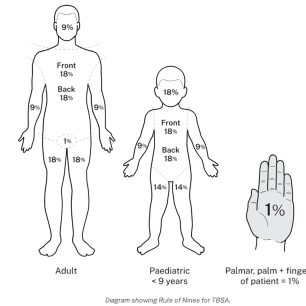
A midnight emergency run across Lough Corrib with a badly burned child—fear, mistakes, and instinct collide in this raw story of risk, parenting, and consequence.By Andy Kirkpatrick
Reflections
G is for Garibotti
A quiet evening in Rolando Garibotti’s Boulder kitchen in 2004 reveals the human side of one of Patagonia’s greatest climbers. A personal reflection on talent, illness, humility, and the day climbing regained its wonder.By Andy Kirkpatrick
Reflections
U is for Unknown Pleasures
What do you really get out of climbing? Not just the views. A deeply personal reflection on the small, unexpected rewards of mountaineering — from frost-nipped fingers and cheap tea to coming home changed.By Andy Kirkpatrick
Climbing
GriGri Unconfidential
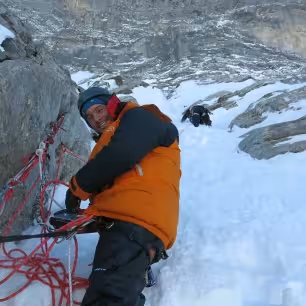
A raw, honest confession about repeatedly fucking up with the Petzl GriGri — misthreading, open-device rappels, and the psychology of climber errors. Not a gear review, but a deep look at why we all make mistakes and why honesty matters more than looking competent.By Andy Kirkpatrick
Climbing
Beyond Help
When professional rescue isn’t coming: A gripping account of a near-fatal fall in Kenya and a fatal accident in Kalymnos. Essential reading on self-rescue, expectations vs reality, and staying alive in the mountains.By Andy Kirkpatrick

Climbing
Psycho Vertical (2017)
"Psycho Vertical: a raw climbing film about fear, obsession, and pushing into the vertical unknown, where control slips and consequences bite."By Andy Kirkpatrick

Reflections
If
A reflective essay by Andy Kirkpatrick on solitude, excuses, and climbing ambition, sparked by Napoleon Hill’s “Fifty-Seven Famous Alibis” and the endless “if only” mindset that holds climbers—and people—back.By Andy Kirkpatrick