
Reflections
Down Punching
A Trip Report for the Shortest Straw (5.7 A4-)
By Andy Kirkpatrick
November 4, 2025
Reading Time:31 minutes.
First, before the trip report, a little story.
Prologue
When I was twenty, I lived in London, and someone asked me if I wanted to go to a Northern outdoor trade show, back when the UK had many outdoor manufacturers who wanted to show off their wares, instead of outposts for Chinese and Vietnamese factories.
I travelled up on the train, and walked around the huge conference halls, filled with manufacturers big and small, the place filled with energy and chat. Back then, most outdoor companies were run by wild-looking outdoor people, all jeans and trainers and t-shirts, some by famous climbers, or had reps who were well-known, rather than just salesmen, who could be selling kitchens one day, kayaks the next.
You can tell an old-school rep, as all they talked about was what you’ve been up to, or what they’ve been up to, or how X product would be great for X or Y climb. They were the best shop workers, in that they spent as much time convincing you not to buy X and why you should buy Y. A salesman only talks about margins, or how X jacket has four pockets, while Y jacket has five, and all they want is a sale, not a conversation (unless it leads to a sale).
A lot of these companies seemed to make the stuff they wanted to use themselves, or stuff their friends wanted (friends who were still climbing and going on trips, and not being captains of industry). If someone needed a lighter tent, they’d be able to ring someone up and get them to make one; if it worked, it’d go into production and be on sale within a few months. It was an amazing time, and you’d always come back from a trade show fizzing. I’ve not been to a trade show for decades, but if I did, I expect it would be like walking around Ikea. Beautifully lit, but soulless.
Somehow, Hamish Hamilton, the owner of Buffalo Systems in Sheffield, who I’d talked to a few times on the phone, invited me to dinner. This was odd, as I was just a shop assistant (“a robot in disguise”), but I guess he saw something in me I didn’t see in myself back then: a boundless enthusiasm and energy for the outdoors.
I was told to meet him at the hotel where he was staying, and found myself later that evening in the bar for pre-meal drinks, sitting around a table where Doug Scott held court. For a UK climber, this was like a musician sitting across from Mick Jagger or David Bowie.
Doug told a few funny stories, but one that stands out. It was about being buried alive by an avalanche on a recent expedition to the Himalayas. He described fighting to stay on the surface, then fighting once he slipped beneath. Doug was an ox of a man, and although no one can fight a million tons of snow and ice, Doug could probably leave it with a black eye. Eventually, the slide stopped, and Doug found himself entombed alive. Most people would have given up, gone limp, and died—but not Doug. Even though he was virtually concreted into the frozen ground, he wriggled and wriggled, pushed and pressed, until he forced his hand up through the surface.
He acted out the slow, panic-free movements: first creating a little space around his face, then slipping an arm free of his rucksack straps, wriggling like an undead corpse until he could breathe fresh air. If I remember right, a partner saw his hand and was able to dig him out. And Doug got to live another day.

Over the following years, I became friends with Doug and did a lot of slideshows for his charity, Community Action Nepal (CAN). I went on tour with him and spent many a morning listening to him over breakfast, or an evening in a bar or around a kitchen table. But that story about survival stayed with me more than any other. I interpreted it like this: when it comes to survival, it’s not always about the big things, like that impossible Vertical Limit canyon jump, or Stallone one-armer, it’s often about the smallest things, just a wriggle, and save yourself bit by tiny bit. To not give an inch. To not give up.
So, to the trip report.
Part One: Being There
Due to circumstances, new children, work, and location, I’d begun to come to the conclusion maybe I was over climbing big things, or big things were over me. I’d got into my 50s knowing I’d probably never do the really stupid things I might have hoped to do in my 20s, 30s, and 40s. Lockdown probably also gave some room to think twice about life, like how someone is hell-bent on killing themselves, but gets delayed, and changes their mind.
It was time to gently enter the night (aka, take up sailing, or golf, or ballroom dancing).
But my wife Vanessa kept on at me, which is how life is sometimes, where your wife (or husband, or other), is at you because you’re always away, or planning to go away, or always somewhere else in your head, away when there, and when you’re not, and are there to stay, and present, they wonder what’s wrong.
I would often joke “I used to climb mountains, but now I’m retired”, I’d say, and Vanessa would chip in “No, he’s not”.
Part of me was sad, but part of me was relieved, as being married to someone who is never there in spirit, or body, is not nice. If you think someone loves you, it’s nice to think they’re thinking of you, sometimes.

Plus, having kids in your fifties is not like having kids in your twenties. They say grandparents make the best parents, and it’s true of old parents as well (well, one old parent). I could go through all the motions in the past, of saying how much I loved my kids, missed them, didn’t want to die and leave them without a dad, but that was all bullshit. It’s what you said in the 90s and 00s. I was the modern thing. Really, you could fuck off for a year if you could.
No, I feel the possible pain and damage being away might inflict, made worse by being around all the time. When you’re not a stranger, not just passing through, it’s more painful to leave.
Also, having two small kids meant I was bloody knackered all the time, and the idea of going away, unless it was to a hotel, by myself, for a week, was unthinkable.
But, like I say, my wife was on at me, that I “should go to Yosemite” and “climb El Cap”. I wondered if this was less about my climbing relationship with myself, but more about the climbing relationship with Vanessa. She married a climber, not a non-climber. She still had that climbing frustration, of getting saddled with kids, and the weather on the West coast of Ireland, and no climbing wall, that constant drum of “I need to go climbing”, that itch you can’t scratch. Me, I’d overcome that years ago, by just disconnecting that bit of my brain.
“Why don’t you feel the same urge to climb as I do?” Vanessa would ask. “I just don’t think about it”.
They say (or maybe I said?) you’re not going away until you’ve bought your plane ticket, so one night, after Vanessa had been on at me, I found two flights coming and going from San Francisco, a month apart, and booked them.
“A month!” said Vanessa. That’s a long time.
Sometimes you can’t win.
Part Two: It’s Not You, It’s Me
Getting from County Galway, Ireland, to Yosemite Valley isn’t that easy, or is far harder than going from Sheffield or London. It required a 4 a.m. start, then taxi, coach, plane, hire car, which doesn’t sound too bad, but was, as much of it was done without any sleep, apart from driving the hire car (note to self, once you get over 50, you should do what they do when hiring an RV, and spend a night in SF before driving to the valley).
My objective was a typical AK one, crazily over-optimistic. To arrive in SF day one, and be on the wall by the afternoon of day 2, the idea to make the first solo of Disorderly Conduct (A4+), and then get down and team up with Tom, a French climber (he lied to me, and said he was from Cuba), and do a repeat of an even harder route (Ephemeron (VI 5.10 A4), all in one month, when both routes might take 10 or more days to do).
I did manage to do all my food shopping on the morning of day 2, and carry in a load of water to the base of the climb, and fix one pitch, but I felt knackered, and fat, and unfit. I kept bumping into people who knew me (I’d become a bit of a Yosemite celeb it seemed, like the thinking man’s Alex Honnold), and so every second person I met was like “Are you Andy Kirkpatrick?”, and my reply was “I used to be”.
I intentionally avoided the Yosemite fleshpots, of Camp Four, the bar, the pizza deck, and just kept on carrying loads up to Disorderly Conduct, fixing a bit, and then repeating. I’d often wake up in the woods at 4 a.m., get up, and just start grafting, experience having taught me that success often stems from front-loading the trip, getting as much done as you can early on.
But, lying in my hammock at night, I felt something I’d not felt for a long time, something I’d always hated about climbing trips: indecision, procrastination and doubt, trying to run calculations over and over in my head, that if I start on this day, I will get to the top on that day, giving me enough time to link up with Tom. I knew I was cutting it tight, and would flip between yes I can, to no I can’t, often switching mindset hour by hour.
Then I went up to my fixed ropes and found another team was ahead of me, sharing the same start, and I felt a sense of relief, that this meant I had to slow down a bit, come what may. But, just as I was having my doubts, they were too, Yosemite that kind of place, a place where you meet a young guy at the base, with all their kit, and a rope fixed, who has trained for months for his first El Cap solo, but who has vanished, having had second thoughts, when you pass again.
The team above decided to bail, but for some reason it had left it to the smallest member of the team to get all their bags down, so, hanging at the base, I jugged up my ropes to help her, being a pro big wall bailer.
Using a Monster Munter, we managed to lower all the bags down to the base, and then I clipped into my fixed rope with my GriGri, and zipped back to the ground. But, when I went to remove the GriGri, I found I’d not closed the sideplate, meaning, if I’d weighted and unweighted it while rappelling, the rope could easily have fallen out. I sat down, and got a grip of myself. I was not being rational. I was being stupid, thinking I could get back in the game after five years away from big walling, and just throw myself at a wall like this, or any wall. I was a liability.

Luckily, my body stepped in and did the honours of knobbling my ambition, coming down with a bad dose of something. I had been sleeping up at the base of the wall, intending to start up the route, and commit, but instead found just walking back down to the car a feat in itself. Once there, I drove down to Mariposa in search of an actual bed, a trip that required me to stop several times and just sleep. When I found a bed in a motel, I fell into bed, and slept for 18 hours straight.
The next day I made noises to myself that I’d get back onto the wall, but instead, paid for another night.
I had a funny feeling, though, this memory of a UK Brit big wall hardman I’d met once, who’d come out to climb the Sea of Dreams, but didn’t. You could tell this was a hurrah to his past self, and if he didn’t do it, it would be his last; he’d never come back to this Neverland. I felt the same. If El Cap rejected me, that would be it; we’d be over. The thrill would be gone.
I’d spent my whole life walking out on things and people, wanting to be the one doing the leaving, being the destructive one, why stop now? But first, I had to have it one more time, so it was me leaving El Cap, not El Cap leaving me.
Part Three: The Short Straw
Time was up on Disorderly Conduct, and so I had to replace months of planning and visualisation and dreaming with something else, something shorter.
I’m at the stage with El Cap that I’d done every route I wanted to do, some several times, leaving just the routes I didn’t dare do. But there was one route left to tick, Shortest Straw (A4- 5.7).
I’d climbed the first three pitches back in the 00s with my paraplegic girlfriend Karen Darke, the idea being I’d climb something for me, and she’d climb El Cap in the process. But we were too slow, so we bailed after the crux Journey Through the Brain pitch (A4-). Releading those pitches would be a pain, as they were also thin, and scary, and close to the ground, and I was about 20kg heavier, but it was the right length route in the right spot for moving my kit over to.
And so, the next day, I drove back up to the Valley, hiked up, and began ferrying enough water for a week across to the route, which stood beside Zodiac and Zenyatta Mondatta.

The Valley tended to cool off after Labour Day, but instead, the Valley was seeing record highs, as was the whole of California. The first pitch was brutal in the sun, and I ended up rappelling off halfway up as I felt my head was going to boil over, fixing my rope to a bunch of rivets, and scrambling down into a nest of rocks at the base, a tiny cave full of old pieces of gaffer tape, empty bottles, and the threat of rattlesnakes.
“I’m going to need more water,” I thought, as I trekked down the trail.
The next day, I started in the dark, but again, by the time I’d finished the first pitch, I was done.
I climbed the second pitch the next morning, and hauled all my kit up to the bottom of pitch 3, The Journey Through the Brain, in the cool of the evening, and spent my first night on El Cap for many years.
Part Four: Hyperthermia
I was up early for the crux pitch, and found it funny how I remembered it all so well after so many years, first a bit nutty-y-pokery, then hooks, hooks, and more hooks, A4 climbing, if you fell (but you’d have to want to), then some more scary fixed heads (where you could fall, even if you didn’t want to, sending you down that gear hooking section).
Climbing was OK, fine even, just going through the motions, but the heat was off the scale. I noticed that people were coming up to try Zodiac, but no one was sticking with it. Like ants under a magnifying glass, they were all shrivelling up under a sun that appeared at 7 a.m and stayed around until 7 p.m.
Rather than clean the pitch, I rapped down to my portaledge, head steaming, and made a sun shade from my sleeping bag, took off all my clothes, and just lay there drinking tea for seven hours. A better man would have bailed. But not me.
“I need more water,” I thought, realising at this rate, and in these temps, I’d not be able to climb 1.5 pitches a day (lead, clean and haul 1, lead the next and clean and haul the next day).
That evening, I cleaned and hauled and then fixed down to the ground with two sixty-metre ropes in the dark, the ropes hanging clear all the way, the ground still baking hot, rattlesnakes rattling in the bushes as I touched down.

I took a half-day off the next day, and ate some ice cream as I filled up my MSR water bladders and spare bottles, but for some reason, I neglected to buy any extra food. The Valley seemed to be filled with climbers who’d bailed from the walls due to the heat, doubly so as the forecast was for more and hotter in the days to come. But I had a schedule to keep, and felt I had a process, so I walked up in the cool of the evening, jugged my fixed ropes, and hauled my water. I now had six litres a day, rather than four, and enough to last me for a ten-day ascent. And so I carried on carrying on.
Highlights of the early part of the wall were a rescue, as well as watching everyone bail due to the heat, meaning I got to watch them all watching me, as they swam in the river. And carried on carrying on.
Part Five: The Joy of Hiss
Much of the rest of the route went by in a daze, with the temperatures reaching record levels, both for the valley, and for myself. I’d lived in the Middle East for a year, climbed in Oman and Saudi Arabia in 50-degree C (122F) weather (well, in the shade as much as you can), and so knew something about heat, plus I’d got heat stroke while soloing Aurora (vomiting etc.), so this wasn’t my first rodeo. But as day by day the temperature rose, eventually reaching 39 degrees C (102F). Such heat isn’t so bad, if you’ve got shade, can lie in the forest, or hang around an air-conditioned mall, but when you’re on a shadeless wall, with the unrelenting sun on you for twelve hours, as hot as hot within minutes of the sun coming around, then you might as well be staked out naked in the desert.
The only way to progress was to climb the pitch in the morning (4am wake-up), hopefully getting it done by 12, then rappelling down and trying to survive the rest of the day, until the sun passed, and you could clean and haul the pitch.
You would be forgiven for thinking that under the protection of my sleeping bag, clipped into the suspension of my portaledge, I could while away the hours snoozing, reading my book, or checking out my Facebook. But no, the reality was something entirely different.
For the first hour, it was like someone who’d been set alight trying to extinguish themselves, trying to fight a very odd kind of heatphobia, or agoraphobia, claustrophobia, something. I’d take off all my clothes, and in some kind of daze, wait until I came round, half awake, half asleep, half alive, half dead. I’ve experienced many alternative states, but this was the strangest state I’d ever experienced. It was pure delirium.

Finally, I’d get it together to put on my stove and brew a litre of milky tea, the most exquisite part, when I screwed on the gas canister, and felt that ice-cold flush of super-cold iso-butane on my skin.
People who don’t drink tea will never understand tea drinkers, but tea won us an empire, and two world wars, and on that wall, tea had never tasted so good. Every sip, every gulp, every mouthful was like thin, brown nectar. It brought me back to life.
Once drunk, I lay back and just lay there unmoving, not reading, not scrolling, not even thinking.
The hours would pass, but not as if bound by time. The only thing that mattered was the passage of the sun, and the shadow that grew from the Dawn Wall that nibbled at an ant’s pace, until it reached and released me.
This went on day after day. The climbing might have been hard. It might have been easy. Dangerous or safe? I don’t remember; it seemed immaterial. I remember some loose stuff, where I had to be careful. I remember quite a lot of beaks. I remember one fright when I thought my crappy stitching was coming apart on the sling of my hook. But all that mattered was getting to the top before I ran out of water.
By now, the entire wall was empty. No one was doing anything. Just me, the ant under the magnifying glass, moving up bit by bit.
I had that usual hope of hoping I had more water than I hoped I had. Shaking my haul bags, thinking there must be an extra few litres down there, only to empty the bag out onto my haul bag, and find there were no extra measures. I’d have to ration my water, but I was close.
I think the only time I thought I might really die on the wall was when Marek Raganowicz, the gnarliest climber on the planet, texted me. He was also here to solo El Cap, but was hiding down in the woods, and told me he didn’t know how I was surving in such conditions (later, he said “you showed you tough face on the Shortest Straw - respect, bro”, which is better than being knighted by King or Queen).
Much of climbing, and much of life, is nothing but going through the motions. You could be a brain in a glass jar. This wasn’t that.
Part Six: Touch Up
And, the Shortest Straw was over. With a swing, I swung over onto Zodiac, just two pitches to go, pitches I’d climbed six times before, but being 39 degrees, down I went until evening. I told myself that maybe I should climb the last two pitches in the dark, but by the time I’d hauled up to Peanut Ledge, I was done. I had about one and a half litres of water left after my dinner of boiled sweets (BTW, I’d run out of food four days earlier, my six-day ascent now on day ten), and thought if I started at 4 a.m., I’d be able to get to the top before the sun got too hot.
Someone had texted me to tell me they’d left several litres of water on the top for me, and I had been fantasising about lying under the shade of the big tree at the top of Zodiac, snoozing and drinking endless water, before heading down to take a bath in Coca-Cola and ice cubes.
I climbed the 1st pitch in the dark, a monster offwidth with an awkward finish, and cleaned and hauled up to the last pitch (well, 2 pitches run together). I drank some water as the sun came around, leaving me with about 500ml in my bottle.
Up I went, up familiar climbing, familiar placements and moves, but the sun was not going to let me get away this time, and beat and beat and beat me. All I needed to keep it off was to keep drinking, but I couldn’t. I knew the second I drank the last drop of water, it would have me. I’d have to go down and just ask to be rescued. I’d be like a diver who runs out of oxygen. There was no digging deep.
I passed the intermediate belay, where I was supposed to stop, and kept on going up the final confusing section of Zodiac, the sting in its tail that has stung many a climber, strung out, and stung, unable to work out where to go (answer: UP!).
I drank another sip of water, my bottle now almost empty, but not quite, and tried to hold back the panic, keep it together as I crawled over the hot coals, the sun now at full power.
Hooks, cams, top steps, more hooks, fixed pins with tat. Close.
The final roof and traverse, awkward, strenuous, the summit, the end, held out of reach, no simple Nose scramble. Five moves to go. Take a last sip. Five. Four. Three. Two. One.
I pull over the lip. I clip a bolt. Then another. I have one inch of water left. I take off my rack and harness like a man on fire, and stagger away from the edge. There is no tree, no shade, the tree lost to some avalanche, only bushes. But there, under that familiar rock, are the bottles, several. I grab two and crawl into a bush and curl up. It’s not the shade I wanted, but such is life. At least I have water.
I drink and drink and drink and drink and drink and drink.
I drink four litres of water. My belly, empty of food, looks pregnant with water.
I lay there, in the spiky, ant-crawly, dirt, in the kind of discomfort only someone who’s just summited El Cap could tolerate. I had made it.
I wanted to lie there for the rest of the day, until the sun went down, then haul my bags in the dark, roll out my bivvy kit, and sleep the sleep of the living on top of El Cap; go down in the cool of the morning with half my kit, and have a breakfast of champions; sit and congratulate us both, me and the Captain, for consummating our love, for re-consummating our vows.
Is this what you were looking for, the top, or was it to go back to the beginning, a new man, not an old one?
But, I was two days overdue for my meet-up with Tom, and the clock was ticking, no rest for the wicked, so I took a bottle of water and poured it over my head, soaking myself like a man about to run back into a burning house, and went back over the edge to get my bags, and get down.
A day later, we tried Ephemeron, and bailed (it was a clusterfuck, with the first pitch being crossed by the Sickle Ledge fixed ropes), and the day after that, we got on Native Son (5.9 A4), and stuck, topping out just in time to drive to San Francisco and fly home. But that’s another story.
Postscript
I can’t put how I’ve interpreted Doug’s story into words easily, and I’m sure Doug – if he were still with us – would not recognise my interpretation, seeing as it is alone, separate and unique. Partly, it’s about not giving in, to wiggle, and struggle, and worm, not in big ways, but tiny, but always in service to escape. Escape from what? Death of course, not just death death, but living death most of all. There is often every reason to give up, to give in, to accept all hope is lost, to go into the night. Doug didn’t, and didn’t right up to the end. He went down punching. That’s the only way to go.
This piece was originally posted on Substack (andykirkpatrick.substack.com), please subscribe.
PV Podcast
Read More
Reflections
Midnight Run
A midnight emergency run across Lough Corrib with a badly burned child—fear, mistakes, and instinct collide in this raw story of risk, parenting, and consequence.By Andy Kirkpatrick
Reflections
G is for Garibotti
A quiet evening in Rolando Garibotti’s Boulder kitchen in 2004 reveals the human side of one of Patagonia’s greatest climbers. A personal reflection on talent, illness, humility, and the day climbing regained its wonder.By Andy Kirkpatrick
Reflections
U is for Unknown Pleasures
What do you really get out of climbing? Not just the views. A deeply personal reflection on the small, unexpected rewards of mountaineering — from frost-nipped fingers and cheap tea to coming home changed.By Andy Kirkpatrick
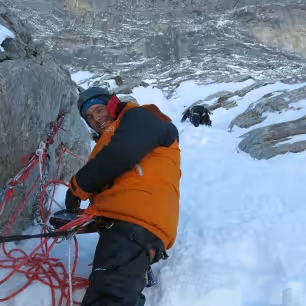
Climbing
GriGri Unconfidential
A raw, honest confession about repeatedly fucking up with the Petzl GriGri — misthreading, open-device rappels, and the psychology of climber errors. Not a gear review, but a deep look at why we all make mistakes and why honesty matters more than looking competent.By Andy Kirkpatrick
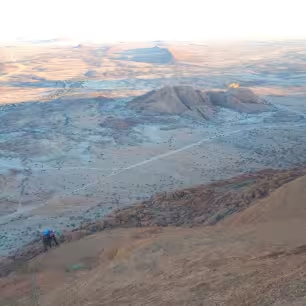
Climbing
Beyond Help
When professional rescue isn’t coming: A gripping account of a near-fatal fall in Kenya and a fatal accident in Kalymnos. Essential reading on self-rescue, expectations vs reality, and staying alive in the mountains.By Andy Kirkpatrick
Climbing
Psycho Vertical (2017)
"Psycho Vertical: a raw climbing film about fear, obsession, and pushing into the vertical unknown, where control slips and consequences bite."By Andy Kirkpatrick
Reflections
Brotherhood of Rope
Andy Kirkpatrick returns to climbing after a neglected bicep injury, grappling with ego-bruising restarts, chaotic family crag days, and the raw futility of the sport. Reflections on old friends, near-misses, and the heavy shadow of suicide—including the sudden loss of a charismatic climbing mate and a salvific message from a fallen hero—explore pain, connection, and why words can feel like morphine when life unravels. Intimate, humorous, and unflinching.By Andy Kirkpatrick