
Q&A
Gully Learning
A response to a climber’s near miss in wet, waterfall conditions, exploring lessons learned about rappel technique, Prusik back-ups, and managing risk in slimy gullies—plus a discussion on the controversial use of backups in waterfalls and the fine line between safety and new hazards.
By Andy Kirkpatrick
August 12, 2021
Reading Time:05 minutes.
Hi Andy,
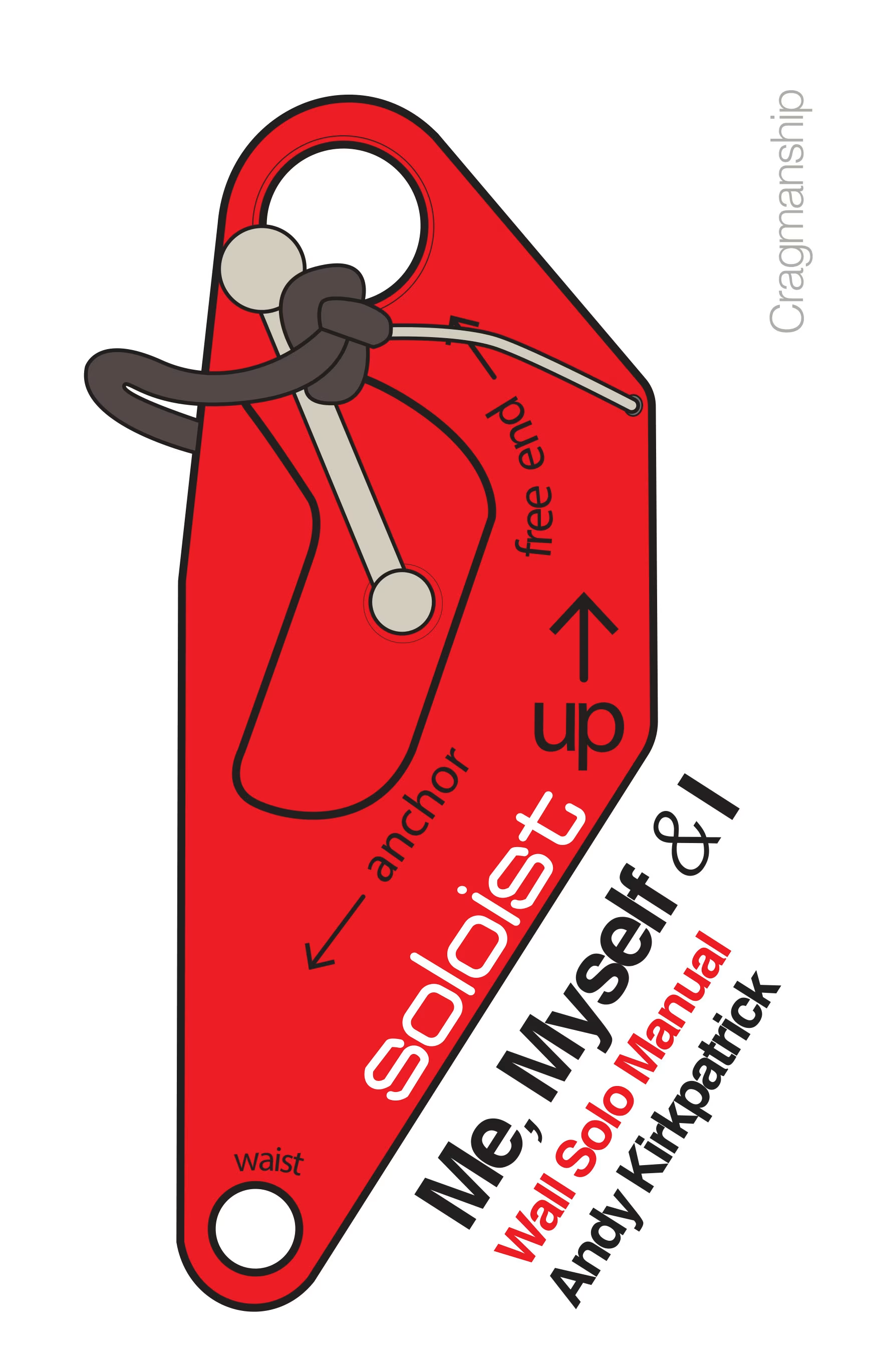
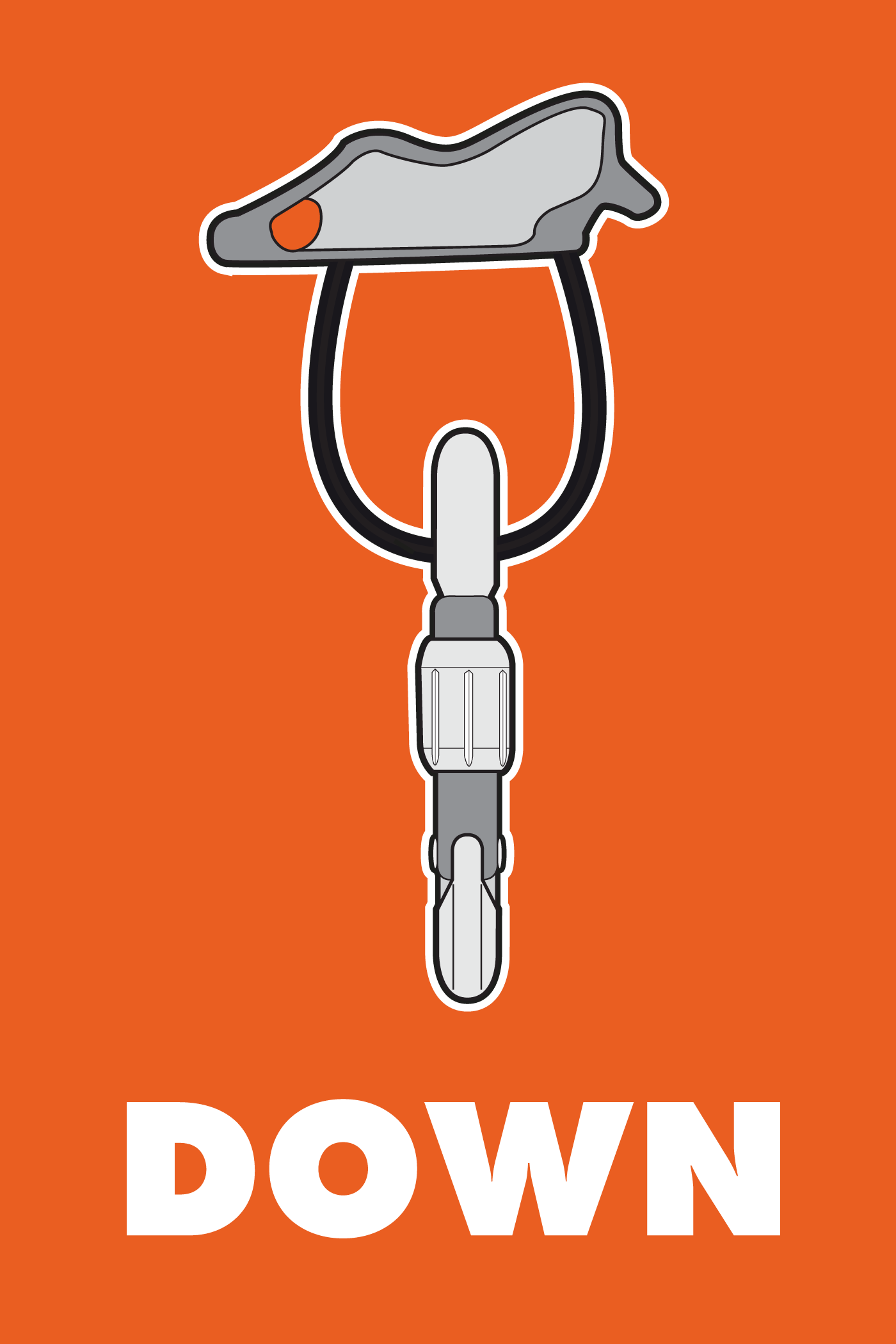
Wanted to let you know that your book Down helped me a lot on a recent climb I attempted.
My friend Ewan and I decided we were going to attempt the Clachaig Gully last week after a recent heatwave. We were met with waterfalls and wet slimy rock and felt the weather was too good to spend the day doing this so decided to descend back down the gully in search of better rock for the afternoon.
We had 4 fairly long, loose, wet waterfall abseils to do to get to a point where we could climb out back onto the approach path. The first abseil was a good laugh as we couldn’t quite believe what we were about to do. We abseiled straight down a waterfall getting soaked right through but spirits were still high and the sun was shining. The second abseil was a bit more serious as we had to abseil over a roof and straight down another waterfall. Due to your book Down I always use a prusik now, something I did not always use in the past, and on the abseil, it probably saved my life. I was trying to get over the bulging roof with the waterfall pouring down onto me, my foot slipped and naturally, I let go of the rope to stop me from smashing into the wet wall in front of me. My prusik caught me.
Feeling a bit shaken up after getting back down to the ground I was eager to get out of the gully but still had a few more abseils to do. The system I was using was a 60cm sling with an overhand knot in the middle, belay clipped to that and prusik clipped to my belay loop. Whilst setting up the anchor I somehow managed to drop my belay plate. It did not help it was a pale green colour making it impossible to find in all of the grass and bushes that are in the gully. With two abseils to go, I had no option but to use the techniques I picked up from your book. I used 4 crabs to make a carabiner brake to get down the next to abseils.
Had I not read your book, this day could have been very different. It would have either been a call out from the Glencoe MRT or worse. I am sure you get stories all the time where your books have helped folk but just thought I would use the opportunity to make you aware of the impact it had and my story.
The day ended with us having to rush through to Fort William to get a new belay for climbing the following day.
Looking forward to the return of the podcast and your Substacks.
Blair
Hi Blair!
That’s a great story, and I’m glad you’re still in one piece. What’s best about it is how you’re able to identify what you’re learning and then see how it plays out in the real world—its benefits and limits (i.e. you didn’t break both your legs). It’s also good to take what you learn and mix it with what you already know, tweaking and adjusting until it becomes your own, and then passing it on when you can—especially things like the Prusik back-up.
I suspect you dropped your belay device because you missed a few tips in the book, such as putting your back-up on the rope first so it holds the ropes in place, like an extra hand. You can also reduce the chance of dropping a device by feeding the ropes into it before unclipping, and by clipping in a spare HMS in place of the one it’s racked on.
Routes like Clachaig Gully are great places to make life hard for yourself. They sit well outside the comfort zone of most climbers—wet, slimy, loose—and although it feels counter-intuitive to seek that out, it always pays dividends later when you’re forced to deal with a pitch or route that’s wet, slimy, and loose (“at least this isn’t as bad as Clachaig Gully”).
I once went up to climb Clachaig Gully with a bunch of friends, including my mate Dick, who’d climbed most of the big north faces in winter. When we arrived at the first pitch he took one look at it and said, “Fuck that,” and went down to the pub. Another lesson learned: although wet and dank gullies are Type 2 fun, they’re not something you want to become too good at—they’re the climbing equivalent of S&M.
Best,
Andy
Update
I had an email pointing out that a back-up should not be used in a waterfall due to the risk of the climber becoming stuck. Here’s my response.
Yes, this is a tricky subject and really crosses over into canyoneering and caving. My guess is that Blair knows less about canyoneering and caving than climbing, and perhaps the proof of the pudding is that although he let go of the rope, he didn’t end up as another mountain rescue statistic or headline (“Young climber dies in Glencoe death gully”).
He could just as easily have become another headline (“Young climber drowns in freak accident in Glencoe death gully”), but that’s how it goes sometimes. You do the best you can with the information and methods available, ideally ones that have worked for others, and you run with them.
Have you ever seen this video? It demonstrates what happens if you don’t use a back-up when descending a waterfall. In this case, he did have a back-up, but it wasn’t set correctly (I’m guessing it was too long).
Cheers,
Andy

PV Podcast
Read More
Reflections
Midnight Run
A midnight emergency run across Lough Corrib with a badly burned child—fear, mistakes, and instinct collide in this raw story of risk, parenting, and consequence.By Andy Kirkpatrick
Reflections
G is for Garibotti
A quiet evening in Rolando Garibotti’s Boulder kitchen in 2004 reveals the human side of one of Patagonia’s greatest climbers. A personal reflection on talent, illness, humility, and the day climbing regained its wonder.By Andy Kirkpatrick
Reflections
U is for Unknown Pleasures
What do you really get out of climbing? Not just the views. A deeply personal reflection on the small, unexpected rewards of mountaineering — from frost-nipped fingers and cheap tea to coming home changed.By Andy Kirkpatrick
Climbing
GriGri Unconfidential
A raw, honest confession about repeatedly fucking up with the Petzl GriGri — misthreading, open-device rappels, and the psychology of climber errors. Not a gear review, but a deep look at why we all make mistakes and why honesty matters more than looking competent.By Andy Kirkpatrick
Climbing
Beyond Help
When professional rescue isn’t coming: A gripping account of a near-fatal fall in Kenya and a fatal accident in Kalymnos. Essential reading on self-rescue, expectations vs reality, and staying alive in the mountains.By Andy Kirkpatrick

Climbing
Psycho Vertical (2017)
"Psycho Vertical: a raw climbing film about fear, obsession, and pushing into the vertical unknown, where control slips and consequences bite."By Andy Kirkpatrick
Reflections
Brotherhood of Rope
Andy Kirkpatrick returns to climbing after a neglected bicep injury, grappling with ego-bruising restarts, chaotic family crag days, and the raw futility of the sport. Reflections on old friends, near-misses, and the heavy shadow of suicide—including the sudden loss of a charismatic climbing mate and a salvific message from a fallen hero—explore pain, connection, and why words can feel like morphine when life unravels. Intimate, humorous, and unflinching.By Andy Kirkpatrick