
Technique
Hitch Cord, VT or Open Prusik
A clear guide to hitch cords in climbing, explaining their construction, advantages over standard Prusik loops, and how to tie Autoblock and VT (Valdotain Tresse) knots.
By Andy Kirkpatrick
April 11, 2021
Reading Time:02 minutes.
A first cousin of the Prusik loop, the hitch cord is either a DIY cord made from a single length of 5 mm cord (about 50 cm long) with overhand or fisherman’s knots tied into both ends, or a spliced or sewn Kevlar version. Because it’s compact, it works well as a primary or secondary Prusik.
The main advantage of a hitch cord is that, having two clip loops, one can always be left attached (unlike a standard Prusik loop). This allows it to be quickly attached and removed without fear of dropping it. For that reason, it’s ideal for tying an Autoblock or an asymmetric Prusik. The real advantage, though, is the hitch cord’s ability to tie the invaluable VT knot.
When tying the knots at the ends, make sure the tails are not too long, as they can jam the Prusik if they get sucked into the wraps.
Hitch Cord Knots
The most common knot to use is the Autoblock. Tie it by leaving one end clipped in, wrapping the free end around the rope five to seven times, then clipping it back in. I find the Autoblock tied with a hitch cord more effective than one tied with a loop, perhaps because the force is applied more evenly.
The second knot all climbers should know is the VT knot (Valdotain Tresse). Once mastered, it is easy to tie and forms a friction hitch that can be released even when fully loaded. That makes it ideal as a back-up, for passing knots, or for descending a loaded rope.
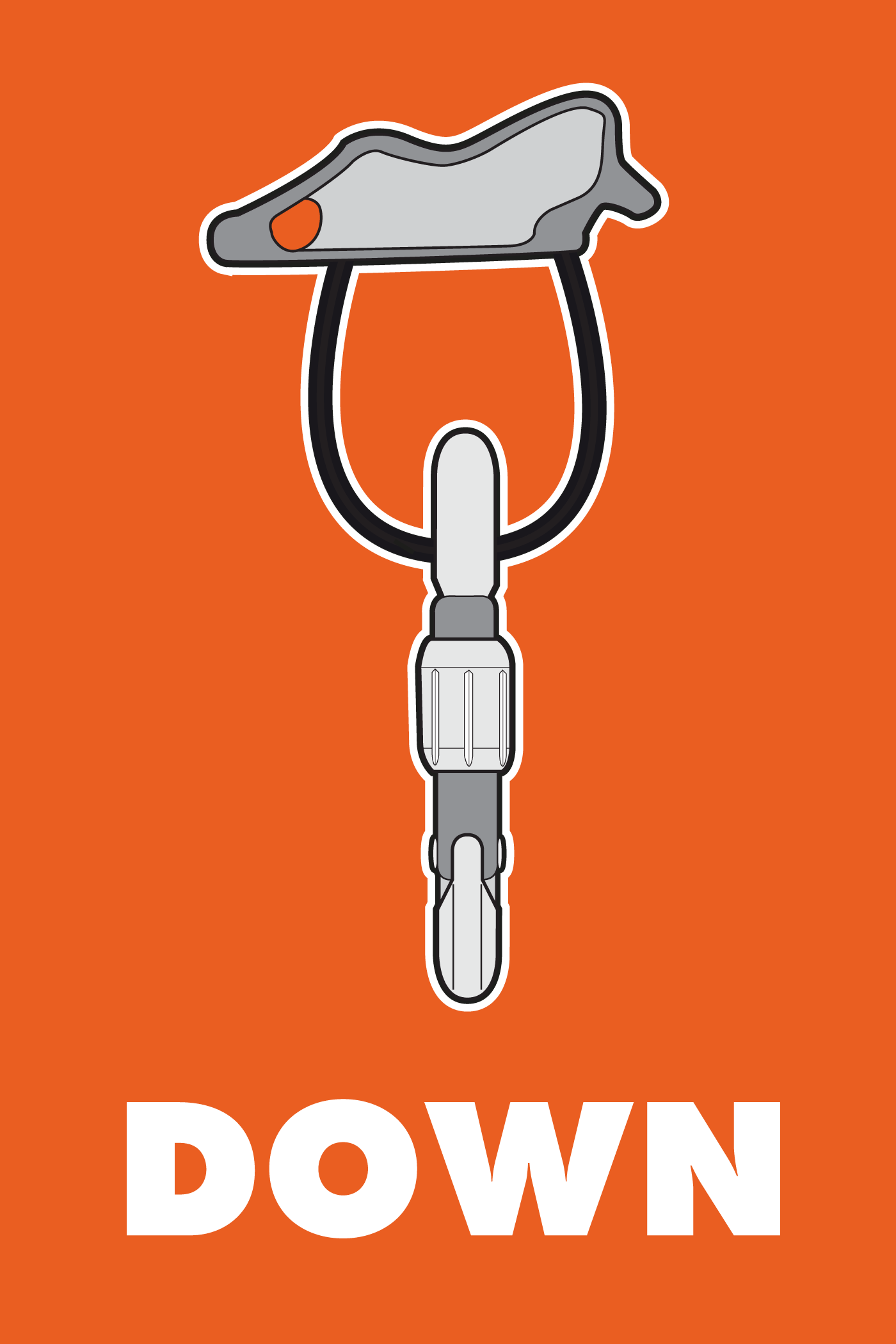
Extract from Down

PV Podcast
Read More

Reflections
Midnight Run
A midnight emergency run across Lough Corrib with a badly burned child—fear, mistakes, and instinct collide in this raw story of risk, parenting, and consequence.By Andy Kirkpatrick

Reflections
G is for Garibotti
A quiet evening in Rolando Garibotti’s Boulder kitchen in 2004 reveals the human side of one of Patagonia’s greatest climbers. A personal reflection on talent, illness, humility, and the day climbing regained its wonder.By Andy Kirkpatrick
Reflections
U is for Unknown Pleasures
What do you really get out of climbing? Not just the views. A deeply personal reflection on the small, unexpected rewards of mountaineering — from frost-nipped fingers and cheap tea to coming home changed.By Andy Kirkpatrick
Climbing
GriGri Unconfidential
A raw, honest confession about repeatedly fucking up with the Petzl GriGri — misthreading, open-device rappels, and the psychology of climber errors. Not a gear review, but a deep look at why we all make mistakes and why honesty matters more than looking competent.By Andy Kirkpatrick
Climbing
Beyond Help
When professional rescue isn’t coming: A gripping account of a near-fatal fall in Kenya and a fatal accident in Kalymnos. Essential reading on self-rescue, expectations vs reality, and staying alive in the mountains.By Andy Kirkpatrick

Climbing
Psycho Vertical (2017)
"Psycho Vertical: a raw climbing film about fear, obsession, and pushing into the vertical unknown, where control slips and consequences bite."By Andy Kirkpatrick
Reflections
Brotherhood of Rope
Andy Kirkpatrick returns to climbing after a neglected bicep injury, grappling with ego-bruising restarts, chaotic family crag days, and the raw futility of the sport. Reflections on old friends, near-misses, and the heavy shadow of suicide—including the sudden loss of a charismatic climbing mate and a salvific message from a fallen hero—explore pain, connection, and why words can feel like morphine when life unravels. Intimate, humorous, and unflinching.By Andy Kirkpatrick