
Climbing
Lessons
A father recounts the emotional journey of climbing El Capitan’s Tangerine Trip with his 13-year-old daughter—balancing risk, promise, and persistence in a story about trust, growth, and what it means to keep your word.
By Andy Kirkpatrick
October 7, 2012
Reading Time:08 minutes.
It’s 4 a.m., and I’m wide awake, coming round with a start in a hot motel in Mariposa. My first thought is, “She did it.”
Ella, my 13-year-old daughter, is sleeping in the bed next to me like only a teenager can—so deeply that only an earthquake could wake her—and she deserves it. Last night she was sleeping on El Cap, having climbed Tangerine Trip over four hard days and nights. If there’s any teenager on the planet who deserves to sleep in, it’s Ella.
I’m sure that for everyone who thinks it’s amazing that someone so young could find the strength to climb El Cap, there will be others appalled that a father would risk his child’s life in such a way. To be honest, I find myself seeing it from both sides. This adventure involved considerable soul-searching and stress, as well as laughter and moments that made me want to cry with joy.
I guess I should start at the beginning.
For many years I’ve brought my kids, Ella and Ewen, along to my slideshows and events like the Kendal Mountain Film Festival. They’ve sat through dozens of talks, sometimes even lying on the stage at my feet, chuckling away. At first I felt uneasy—after all, did I want my kids listening to tales of daring-do? But climbing, and the rewards and risks that come with it, make me who I am. The lessons it has taught me are lessons I’ve tried to pass on.
Adventure is in my DNA, and so it’s in theirs too. They should see what I get up to when I’m away, and understand both the risks and the rewards of striving for impossible things.
I’ve never been a pushy climbing parent. I wanted them to decide for themselves how to explore their limits, exposing them to wilderness and danger the way my dad did with me—giving the impression of freedom while keeping them on a short leash.
One question that kept coming up at talks was, “When are you going to climb El Cap with your kids?” I’d reply, “Oh, not until Ella’s 13,” thinking the youngest girl to climb El Cap was that age (turns out she was 14). This always got a laugh, mainly because it sounded like a crazy idea. Then Ella turned 13 and asked, “So Dad, when are we going to climb El Cap?”
My first reaction was, “Why not?” Having climbed it nearly twenty times—soloed it three times, climbed it in 18 hours, spent 11 days on its hardest route, and almost two months hanging from it—I felt I knew enough to keep her safe. I’d also climbed it with two people with disabilities, Karen Darke and Phil Packer, which taught me what was possible. When you’ve seen someone do four thousand pull-ups to climb El Cap, you realise that physically, at least, a 13-year-old has a chance.
So I said, “Maybe we’ll go in the spring holidays next year,” with no real intention of making it happen.
But Ella is persistent. When we went climbing she wanted to learn how to jumar, how to abseil, how she’d go to the toilet “when we” (not “if we”) climbed El Cap.
Soon her mum—my long-suffering ex-wife—asked, “What’s this about Ella climbing El Cap?” I replied, “Oh, it’s just a phase—she’ll forget about it,” thinking she’d soon be more interested in boys than big walls.
Like most adults, I underestimated my child.
She’d made it her goal, and I realised that letting her down wasn’t an option. I had to make it happen.
The first person to convince was Mandy, Ella’s mum. I left this to Ella, knowing that a child’s persistence is the greatest force in nature. The answer was yes—but only if Ella would be safe and my mate Paul Tattersall was there, the only climber Mandy trusted. Paul agreed, and with reluctance Mandy gave her blessing.
When you act boldly, circumstances tend to lend a hand. A filmmaker, Ian Burton, got in touch about a TV idea involving climbing El Cap with Aldo Kane, an ex-Royal Marine sniper. “What if Ella came too?” I suggested. Ian could cover the costs. Suddenly the trip was possible.
We trained seriously. Ella learned how to pass knots, clean pitches, self-rescue, and wall systems. She missed some school and permission was granted—now that’s a progressive school. Then it all collapsed. Ian couldn’t get a visa. The funding vanished.
Ella put on a brave face, but I knew she was crushed.
That’s when I realised it wasn’t about climbing El Cap—it was about keeping a promise. Mandy even said, “You probably won’t do it anyway.” That was it.
Aldo paid his own way. My first Cold Wars royalty cheque arrived. I spent it all on flights to San Francisco and showed Ella the booking.
We were going.
Two weeks later we arrived in Yosemite. Ella’s first sight of El Cap was its bulk blocking out the stars, headtorches flickering high on the Nose.
The heat was brutal—unlike anything I’d known in Yosemite. Tangerine Trip was chosen for its steepness and safety, but even fixing ropes left climbers close to heatstroke.
Day one was a disaster. Ninety litres of water, three ledges, four days of food. I hauled all day in the sun, watching Ella like a hawk, terrified of heatstroke. That night we bivvied where we were. Ella conquered her second-biggest fear: weeing on the wall—on my legs.
Day two was better but still slow. Ella faced her biggest fear: using a wag bag. She grew more tired with every pitch. I worried about what would happen if she couldn’t continue.
The low point came when she dropped her iPod. She cried, hanging on the rope. Then she gathered herself. “No. I want to do it myself.” And she did.
That night she ate beans and sausages and drank Pepsi. “What stopped you crying?” I asked. “I thought my iPod would always be somewhere beautiful,” she said. “Plus you said you’d buy me an iPad.”
On the final day the wind came. The wall loosened its grip. Ella free-climbed the last pitch in trainers, right on the edge of the world.
As always, there was no time to celebrate. Bags were hauled. Gear sorted. Aldo pointed and I saw Ella asleep, cross-legged in the dirt, her head resting on a tin of beans.
To spend two weeks alone with her was extraordinary. I watched her transform—not on the wall, but revealed by it. She tied in as my baby and untied as an equal.
When the shuttle bus applauded her, I saw not pride, but quiet embarrassment.

PV Podcast
Read More
Reflections
Midnight Run
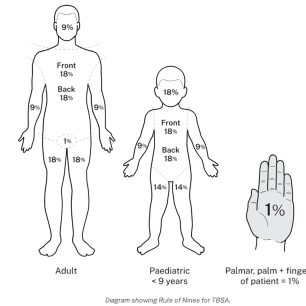
A midnight emergency run across Lough Corrib with a badly burned child—fear, mistakes, and instinct collide in this raw story of risk, parenting, and consequence.By Andy Kirkpatrick
Reflections
G is for Garibotti
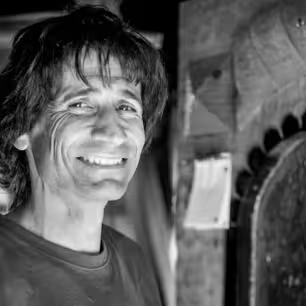
A quiet evening in Rolando Garibotti’s Boulder kitchen in 2004 reveals the human side of one of Patagonia’s greatest climbers. A personal reflection on talent, illness, humility, and the day climbing regained its wonder.By Andy Kirkpatrick
Reflections
U is for Unknown Pleasures
What do you really get out of climbing? Not just the views. A deeply personal reflection on the small, unexpected rewards of mountaineering — from frost-nipped fingers and cheap tea to coming home changed.By Andy Kirkpatrick
Climbing
GriGri Unconfidential
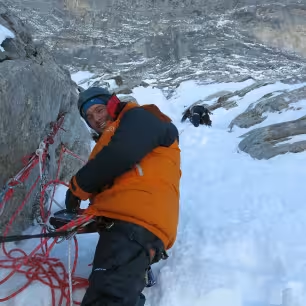
A raw, honest confession about repeatedly fucking up with the Petzl GriGri — misthreading, open-device rappels, and the psychology of climber errors. Not a gear review, but a deep look at why we all make mistakes and why honesty matters more than looking competent.By Andy Kirkpatrick
Climbing
Beyond Help
When professional rescue isn’t coming: A gripping account of a near-fatal fall in Kenya and a fatal accident in Kalymnos. Essential reading on self-rescue, expectations vs reality, and staying alive in the mountains.By Andy Kirkpatrick
Climbing
Psycho Vertical (2017)
"Psycho Vertical: a raw climbing film about fear, obsession, and pushing into the vertical unknown, where control slips and consequences bite."By Andy Kirkpatrick
Reflections
Brotherhood of Rope
Andy Kirkpatrick returns to climbing after a neglected bicep injury, grappling with ego-bruising restarts, chaotic family crag days, and the raw futility of the sport. Reflections on old friends, near-misses, and the heavy shadow of suicide—including the sudden loss of a charismatic climbing mate and a salvific message from a fallen hero—explore pain, connection, and why words can feel like morphine when life unravels. Intimate, humorous, and unflinching.By Andy Kirkpatrick