
Gear
Mountain Survival kit
Andy Kirkpatrick shares his no-nonsense mountain survival kit: a lightweight, homemade first aid setup for UK and Irish hills. Practical gear that actually gets used.
By Andy Kirkpatrick
June 24, 2023
Reading Time:08 minutes.
The following is an extended piece I wrote for the Irish Mountain Log magazine (I do regular features on safety), which might be a bit disjointed (I’ve amalgamated two pieces), but might make others think about the humble first aid kit.
One type of expedition member that always creeps me (perhaps unfairly) out is the individual who's gone beyond a basic one-day first aid course, the type of thing the Red Cross or Saint Johns Ambulance run, and instead has invested in a week-long advanced or wilderness first aid course. With the former minimalist training, you learn how to do CPR, cuts and burns, choking etc., and for less than a hundred euros, it is something everyone should do. With the latter, you learn open heart surgery, brain transplants, and limb amputation, or at least that's what you'd imagine when you look through this person's med kit, or should I say med luggage. Although such an investment should be saluted, what creeps me out is that in my experience, such wilderness first responders have an almost fundamentalistic fervour for martyrdom, only not theirs, but yours! They cannot wait for someone to get a deep gash so they can stop sewing up bits of chicken and sew up a person instead or be so close to death they require an IV, which, if nothing else, will reduce the weight of their ambulance sized med kit by a kilo or two.
The first time I met one of these first aid jihadis was on a trip to Greenland when it appeared we were so overloaded with food, fuel and kit that we could not even take a book, and yet could carry bags of IV, which I pointed out, would freeze rock solid as soon as we stepped onto the ice (and they did). I tried to bring this person, who was probably marching around with a stethoscope around there neck – she did have a stethoscope and a sphygmomanometer (google it) in the first aid kits – that I'd been on many expeditions far from help and beyond a roll of duck-tape I'd never ever carried a first aid kit. In the end, we carried it all across Greenland, but when it came to the primary injuries we faced, which were related to skin rubbing against skin, and pulled muscles, the first aid supplies had nothing to offer.
At the other extreme, you have people like my mate Paul Ramsden, a health & safety professional, a man who's been on more trips than Marco Polo, whose overall view on first aid is just to take nothing that your body will deal with the pain long enough for the rescue to get to you. If they can't, then you'll die anyway. In truth, he tends to carry some hospital-grade pain relief in case you're forced to lay in a tent for a few days with a broken leg, and then some low-dose pain relief for toothache, a common problem on expeditions, probably due to high sugar drinks and altitude and cold, stuff for diarrhoea (although it's best to get it out), and that's it. Such a minimalist approach is one in which you forgo the plastic airway and face shield and just safety pin the casualty's tongue to their lip.
Closer to home, and for Irish hills, you tend to get a number of first-aid types. First, you have the majority who don't carry any kind of first aid kit; after all, with a phone, you can just call the mountain rescue out, right? Then you have the ones who carry a first aid kit they bought in Halfords, but have no clue what's in the bag, even though they'll lug it around for years on end, just in case. Such people tend to be more of a liability, as this kit gives them a false sense of security, and they will be bewildered when that day finally comes when the kit is needed, and they break the wrapper, only to find it contains a warning triangle, hi-vis vest, and tow rope. Store-bought kits are better than nothing, but they're just a starter for something that is going to work. And then you have the people who, as the wilderness qualified, take it a bit too far and carry a first aid kit that's so heavy and bulky that they end up collapsing due to exhaustion, and someone has to use it to bring them back from the dead, or just call the MRT.
Maybe I read the Lofty Wiseman Survival handbook too many times as a kid, but I've always approached the first aid kit concept as more of a survival kit. What is a first aid kit? First, I think you need to both make your own kit from scratch and make a kit that solves a myriad of problems, to repair or keep both body and gear and ambition going forward. First aid kits are always designed to hit the cheapest price point, and so making your own allows you to ditch all the fluff and make what you carry - which is still minimalist - do what's necessary when necessary.
The following is my approach to such a kit, and it is just a guide, and although I might make adjustments for a longer trip, the idea is you just carry this kit all the time and forget about it when a problem comes up, be that a tick on your leg, a broken head torch, or a compound fracture. Note that is is not for alpine climbing or multi-pitch climbing, where something much smaller would be carried (or not), but rather for general hill/crag use in the UK and Ireland.
Kit Pouch
Your kit needs to be in an easily identified, robust, waterproof roll-top bag around 1 litre in size (Sea-to-Summit, Exped, Life Systems). You will subdivide the contents into zipped colour-coded ditty bags (Tuff Bag or search Etsy), linked together and connected to the main bag, and subdivide again using small ziplock bags. Mark the bag with contact details and add a lanyard and medium-sized wire gate karabiner so it can be secured inside the lid of a pack or to a belay or pack in high winds. Add Stuk Glow tape to the buckles so you can find it in the dark without a torch.

Emergency bandage, aka "Israeli bandage"
Although the classic bandage has been around for thousands of years and is a central component of a first aid kit, wrapped in its little crinkly plastic wrapper, the modern emergency bandage, Invented by Israeli military medic Bernard Bar-Natan in the 80s, should now be viewed as the standard for all kits. Part bandage, part field dressing, and is designed to be far more effective at applying pressure to a wound and much easier to secure in place due to its elasticity, width, and closure bar. The closure gives the user a way to apply extra pressure on the wound or twist it to create a Tourniquet. Although you might get shot by an irate farmer, such a tactical bandage is very appropriate for the type of messy head and limb injuries outdoor casualties suffer, the design helps to keep the bandage in place if you have to get yourself out of trouble and walk off the mountain. Speaking of trouble, an emergency bandage is also much easier to apply to yourself.
Although twice the price of a standard bandage (€10 versus €5, which is why they're not part of a standard first aid kit), these bandages are packed very robustly, so they are ideal for a mountain kit and will last for approximately eight years. I would get a 4-inch version and buy two in order to open one for you and your partners to practice with (before it's needed for real).

Burn shield
Any trip that involves using stoves runs the risk of burns, both directly from the stove itself or from spilt boiling water. Tired people can also set themselves or tents alight or pick up red-hot pans or stoves with bare fingers. In my climbing life, I've seen it all. Having some form of treatment for minor burns is important, so a small packet of Burn Shield (10cm x 10cm).

Mini Stretch Wrap
I'd always heard people talk about how great Clingfilm was for burns, but it was only when my 2-year-old daughter grabbed a red-hot radiator and didn't let go, and burnt her hands, that I realised just how good it was for pain relief before you could get to a hospital. The problem was how to carry it, as I knew that folding up a length of Clingfilm would not supply you with Clingfilm when you needed it, just a lump of useless plastic. I thought about just carrying a large freezer bag (still a good idea), but the solution was to buy a mini roll of stretch wrap (10cm by 15cm), and transfer a good length onto a pencil.
Stretch wrap can also do double duty for other tasks, like covering a wound, a compress, or even a makeshift support bandage.

3M Transpore Tape
There are many kinds of tape you can carry, such as paper micropore, Elastoplast, Mueller fabric tape, but Transpore tape (5cm x 0.9 m) works best due to being very sticky, tough, waterproof, and breathable. This can be used like a makeshift plaster or for securing a dressing, but it will most often be used to cover hot spots on your feet or frost nip on your face. Store in a ziplock. I'm also told that Leukotape is great stuff (the joke goes that only the coroner can get Leukotape off of a patient).

Tuff Cut Scissors
Although you can probably use a pen knife, if you have a pen knife, at just 10 grams, having a pair of paramedic scissors comes in very handy. Get a set with bright-coloured handles so you can spot them easily on the ground.
Wound Cleaning
Carry five alcohol-free wipes in a ziplock for wound cleaning, but add a small plastic bottle plastic (30ml) of iodine. This has too many uses to mention, from treating wounds, athlete's foot, to nuclear radiation.
Dressings
Carry two sterile 10cm x 10cm dressings in a ziplock bag, and ideally make one a QuikClot style haemostatic dressing impregnated with a coagulant. This latter style of dressing is highly desirable with a head wound, as you tend to get a lot of blood. Ziplock.
Plasters
Strip of water-resistant Elastoplast/bandaid to cut to size, plus a mixture of waterproof plasters, including Opsite waterproof plasters (often used by Tattoo artists) and Compeed. Ziplock.
Pain Meds
Paracetamol (Panadol) should be your standard over-the-counter (OTC) relief for pain, colds, and fever, as it has the fewest side effects, which is important if you’re giving pain meds to someone else. Ibuprofen (Nurofen), being an anti-inflammatory, is often recommended for muscle pain, but I would only use it if the pain has to be relieved in order to get down (such as shin pain, blisters, toothache); otherwise, your body is inflaming for a reason, so leave it. Codeine is the strongest OTC pain relief you can get and can be combined with paracetamol (such as Co-codamol). If you want the strongest OTC pain relief, you can combine variations of paracetamol, ibuprofen, and codeine, paying attention not to double-dose with paracetamol (so not Panadol and Co-codamol). If you want heavy-duty prescription drugs, such as opioids, you should have some form of appropriate first aid training, such as a wilderness cert. Ziplock, along with a laminated card detailing dosages.
Bad guts
Carry a sheet of water purification tablets and Imodium if the germs get in. Katadyn Micropur MP1 are the most effective tabs, but they're expensive, so a cheaper chlorine dioxide tab (Life Systems or Portable Aqua) are better for emergency use. Two Dioralyte sachets come in handy post-sickness or if you get heat injuries like heat exhaustion or sunstroke. Ziplock.
Cream
Savlon Cream (15g) and Glide Anti-Chafe Cream (22g).
Hardware
Carry a few medium safety pins (which can be used as pins when sewing), plus one nappy and one kilt pin, as these have multiple uses, especially if the zipper busts on your jacket, sleeping bag, or tent. Sterile, individually wrapped surgical blade. Tick Remover (card or tweezer). Victorinox micro tweezers and toothpick.

LED Light
In terms of survival and accident/rescue avoidance, a light source is one of the best tools in your armoury. Carrying the smallest but most effective mini LED lights in your kit is recommended. This can act as a backup to your or a partner's light (broken, lost, dead battery), but it is also at hand if you need to find items in your kit in the dark. The Petzl E+Lite (26g) or Black Diamond Flare (27g) are ideal choices or go for a non-headtorch micro keychain design, like the PrincetonTec' Pulsar (7g) or AtomLight (5g). Oh, and carry a spare battery.

Fire Steel
Although viewed as bushcraft kit for bearded men who hang out in the woods, a micro ferrocerium rod (30mm x 4.5mm/0.01g) can be struck with a ceramic razor blade to create a spark that will light both gas or petrol stoves. This will save your bacon when your lighter is wet (fire steel works wet or dry), or not if you're cooking bacon. The ceramic razor can do anything a razor can, but it will not rust. Due to their tiny size, join both items with a short length of bright fishing line or thread.
Sewing Kit
Needle threader, several needles (#7 embroidery and #18 chenille needles, or sail repair needles) in a sewing needle tube, rubber thimble, 2 buttons, small strip of velcro and patch of fleece, extra strong thread on machine bobbin.
Odds & Ends
Cut down spork (spoons are magic, they just disappear). Pencil wrapped in gaffer tape (heat the tape over a flame to make air matt patches). Write as Rain 3 x 2 notebook. 5m #36 bank line and 5m 1.18mm micro Kevlar cord wrapped on card spool. 1m 550 cord (shoelace). Mini Signal Mirror, used for tick hunting and checking skin/frostnip damage. 8cm hacksaw blade. Ear Plugs. Whistle. Stove pricker. Zip tie.
On an expedition, I would include a small multi-tool like the Gerber Dime, as well as a small file, Alan key, spare crampon bail etc. Micro Kevlar cord wrapped on card spool. 1m 550 cord (shoelace). Mini Signal Mirror, used for tick hunting and checking frostnip damage. Ear Plugs. Stove pricker. Zip tie. For a climbing trip you could include a short length of strimmer wire for a trigger repair.
PV Podcast
Read More
Reflections
Midnight Run
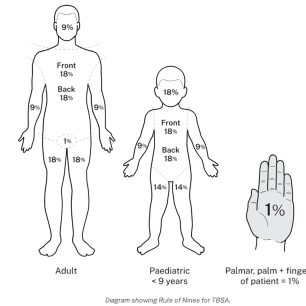
A midnight emergency run across Lough Corrib with a badly burned child—fear, mistakes, and instinct collide in this raw story of risk, parenting, and consequence.By Andy Kirkpatrick
Reflections
G is for Garibotti
A quiet evening in Rolando Garibotti’s Boulder kitchen in 2004 reveals the human side of one of Patagonia’s greatest climbers. A personal reflection on talent, illness, humility, and the day climbing regained its wonder.By Andy Kirkpatrick
Reflections
U is for Unknown Pleasures
What do you really get out of climbing? Not just the views. A deeply personal reflection on the small, unexpected rewards of mountaineering — from frost-nipped fingers and cheap tea to coming home changed.By Andy Kirkpatrick
Climbing
GriGri Unconfidential
A raw, honest confession about repeatedly fucking up with the Petzl GriGri — misthreading, open-device rappels, and the psychology of climber errors. Not a gear review, but a deep look at why we all make mistakes and why honesty matters more than looking competent.By Andy Kirkpatrick
Climbing
Beyond Help
When professional rescue isn’t coming: A gripping account of a near-fatal fall in Kenya and a fatal accident in Kalymnos. Essential reading on self-rescue, expectations vs reality, and staying alive in the mountains.By Andy Kirkpatrick
Climbing
Psycho Vertical (2017)
"Psycho Vertical: a raw climbing film about fear, obsession, and pushing into the vertical unknown, where control slips and consequences bite."By Andy Kirkpatrick
Reflections
Brotherhood of Rope
Andy Kirkpatrick returns to climbing after a neglected bicep injury, grappling with ego-bruising restarts, chaotic family crag days, and the raw futility of the sport. Reflections on old friends, near-misses, and the heavy shadow of suicide—including the sudden loss of a charismatic climbing mate and a salvific message from a fallen hero—explore pain, connection, and why words can feel like morphine when life unravels. Intimate, humorous, and unflinching.By Andy Kirkpatrick