
Climbing
Oh Shit Award #4
A hard look at the risks of rope soloing, why back-up knots are your real belay, and a near-fatal GriGri failure that proves why you must always tie in—no matter how safe your device seems.
By Andy Kirkpatrick
April 10, 2021
Reading Time:05 minutes.
Although I literally wrote the book on the subject, the dark art of rope soloing still scares the shit out of me.
A while back I joined a rope soloing Facebook group, but after a few months I left. While there were some solid people on there, it also attracted a lot of dangerously clueless ones—dangerous to themselves, and dangerous to anyone who might listen to them.
The reason I wrote Me, Myself & I was to try to pass on what I’d learned over five solo ascents of El Cap, plus other walls, to set down safer working practices and highlight techniques that may look safe—like rope soloing with a GriGri—but really aren’t. I’m still not sure whether writing the book was a good or bad idea, as you hear a lot more people talking about rope soloing these days, but I hope it at least flags up dangers some people might otherwise miss.
One of the core laws of Me, Myself & I is the back-up knot. I stress that this is your primary belay—not your Silent Partner, Soloist, GriGri, or whatever other “fingers crossed” device you’re using. I know myself, and many others, who’ve experienced total belay device failure and were only saved from zipping off the end of the rope by their back-up knots.
This is why replacing the back-up knot with a Petzl Micro Traxion is so dangerous. It’s often done to allow smooth feeding of dead rope into the loop that supplies the belay device—if that loop is too big or too small, the device can start to lock up as you climb—but a Micro Traxion offers no meaningful protection if the primary device fails. At best, you’re hoping the knot jams in the device after you’ve already plummeted. In a potential 120-metre fall, that hope is fantasy: you’ll either be dead before the rope runs out, the Micro Traxion will fail, or the knot will shear.
The bottom line is simple: you MUST attach the rope to your harness at some point, with or without a Micro Traxion, no matter how good you think your device is. If you don’t, you’re effectively free soloing with a coin-flip chance of survival.
The story below—short and brutally clear—is a perfect illustration.
Hi Andy
Reading your Oh Shit Awards prompted me to share an incident that happened to me on Friday 13th March 2020, just before the first lockdown in Belgium. I also posted it in Yann Camus’s rope solo group.
On the second pitch of my solo climb that day, I had a near accident. The first pitch was easy free LRS (lead rope solo) with my Soloist. The second pitch was too difficult for me to free climb, so I removed the Soloist and started aiding using a GriGri.
After three bolts I was standing in my aiders, clipped to a tricam, about one metre above the third bolt. Suddenly the tricam pulled. I should have fallen 2–2.5 metres—but instead my fall continued and I ended up horizontal at the level of my anchor. The GriGri did absolutely nothing. It was the back-up knot that stopped me.
Thirty centimetres closer to the wall and my back would have hit a ledge.


I had a mild headache and a sore foot. I went back up to the third bolt and continued using hooks. I stopped using the GriGri and switched to a running clove hitch.
Conclusion: the GriGri absolutely requires a back-up knot. I am convinced I would have been dead without it.
I will not rope solo with a GriGri again. It was my first fall in 20 years—perhaps Friday the 13th was a bad choice.
The likely reason the GriGri failed to catch was that my foot in the aider pressed on the cam, preventing engagement. My biggest mistake was clipping the rope to the tricam before weighting the next piece.
Another mistake was learning aid climbing while rope soloing—but that one’s on me.
Philip
Further Reading
PV Podcast
Read More
Reflections
Midnight Run
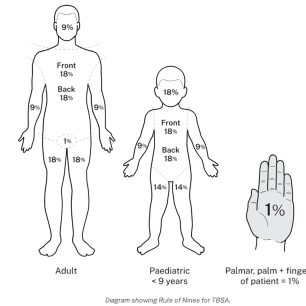
A midnight emergency run across Lough Corrib with a badly burned child—fear, mistakes, and instinct collide in this raw story of risk, parenting, and consequence.By Andy Kirkpatrick
Reflections
G is for Garibotti
A quiet evening in Rolando Garibotti’s Boulder kitchen in 2004 reveals the human side of one of Patagonia’s greatest climbers. A personal reflection on talent, illness, humility, and the day climbing regained its wonder.By Andy Kirkpatrick
Reflections
U is for Unknown Pleasures
What do you really get out of climbing? Not just the views. A deeply personal reflection on the small, unexpected rewards of mountaineering — from frost-nipped fingers and cheap tea to coming home changed.By Andy Kirkpatrick
Climbing
GriGri Unconfidential
A raw, honest confession about repeatedly fucking up with the Petzl GriGri — misthreading, open-device rappels, and the psychology of climber errors. Not a gear review, but a deep look at why we all make mistakes and why honesty matters more than looking competent.By Andy Kirkpatrick
Climbing
Beyond Help
When professional rescue isn’t coming: A gripping account of a near-fatal fall in Kenya and a fatal accident in Kalymnos. Essential reading on self-rescue, expectations vs reality, and staying alive in the mountains.By Andy Kirkpatrick

Climbing
Psycho Vertical (2017)
"Psycho Vertical: a raw climbing film about fear, obsession, and pushing into the vertical unknown, where control slips and consequences bite."By Andy Kirkpatrick
Reflections
Brotherhood of Rope
Andy Kirkpatrick returns to climbing after a neglected bicep injury, grappling with ego-bruising restarts, chaotic family crag days, and the raw futility of the sport. Reflections on old friends, near-misses, and the heavy shadow of suicide—including the sudden loss of a charismatic climbing mate and a salvific message from a fallen hero—explore pain, connection, and why words can feel like morphine when life unravels. Intimate, humorous, and unflinching.By Andy Kirkpatrick